Supreme Court Stays Mumbai Blasts Verdict – Full Story
The Supreme Court Stays Mumbai Blasts Verdict delivered by the Bombay High Court, which had recently acquitted 12 people in the 2006 Mumbai train blasts case. This major decision by the apex court marks a turning point in one of India’s most controversial and high-profile terrorism cases.
While the verdict of the Bombay High Court has been put on hold, the Supreme Court has clarified that the acquitted individuals will not need to surrender and return to prison at this stage. The court’s order ensures that justice is not compromised while also respecting the liberty of the accused until a final judgment is passed.
Background of the 2006 Mumbai Train Blasts
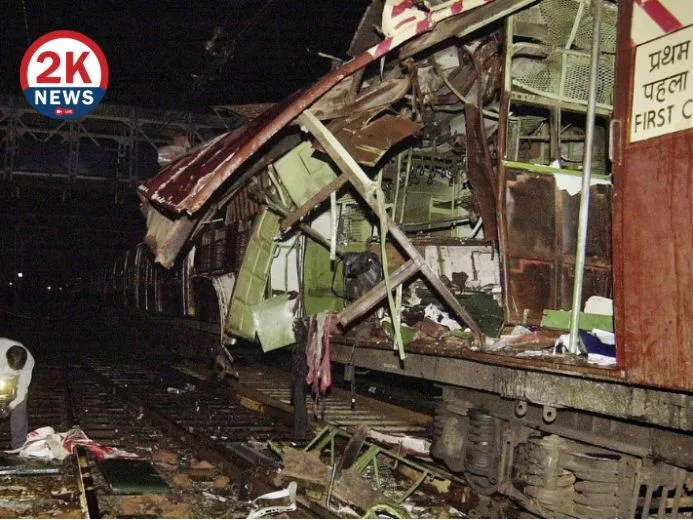
The 2006 Mumbai train blasts, also known as the 7/11 attacks, were among the deadliest terrorist attacks in India. On 11 July 2006, a series of seven bomb explosions ripped through Mumbai’s suburban trains during peak hours. This horrifying event killed 189 people and left over 800 injured.
Following the attack, an extensive investigation was carried out by the Maharashtra Anti-Terrorism Squad (ATS). In 2015, a special MCOCA court convicted 12 accused individuals and sentenced them to life imprisonment. The court found them guilty of planning and executing the blasts.
However, in July 2025, the Bombay High Court overturned the special court’s verdict and acquitted all 12 accused, citing lack of direct evidence, unreliable confessions, and contradictions in witness testimonies. This acquittal sparked public outcry and prompted the Maharashtra government to approach the Supreme Court.
What Did the Supreme Court Say?
In a crucial order, the Supreme Court Stays Mumbai Blasts Verdict issued by the Bombay High Court. The Supreme Court bench, led by Justice B.R. Gavai, stated that while the acquittal is put on hold, the 12 individuals will not be forced to return to jail until the case is fully reviewed.
The apex court also clarified that the Bombay HC’s observations cannot be treated as a judicial precedent for other similar cases. This means that remarks made during the acquittal cannot influence future terrorism or MCOCA-related trials.
Solicitor General Tushar Mehta, representing the Maharashtra government, strongly argued that the High Court’s observations could weaken other terror-related prosecutions, hence the need for an immediate stay.
Why Did Bombay High Court Acquit the Accused?
The Bombay High Court raised multiple doubts about the prosecution’s case during its verdict:
-
Inconsistent Witness Testimonies: Several witnesses, including taxi drivers, gave contradictory statements.
-
Unreliable Confessions: Some confessions were considered fabricated or tampered with.
-
Weak Circumstantial Evidence: The HC concluded that the evidence presented was insufficient to prove guilt beyond a reasonable doubt.
However, the Supreme Court Stays Mumbai Blasts Verdict, indicating that these findings will undergo further review.
Impact of the Supreme Court’s Stay
The Supreme Court’s decision to stay the acquittal carries significant implications:
-
For Victims’ Families: Families of the 189 victims now have renewed hope that justice will be served.
-
For the Accused: The acquitted individuals remain free, but their legal battle is far from over.
-
For Legal Precedents: The stay prevents the HC’s observations from weakening other ongoing terrorism-related trials.
-
For Maharashtra Government: This is a partial victory, as the SC has recognized the need for a detailed examination of the case.
Reactions to the Supreme Court Decision
The Maharashtra government welcomed the Supreme Court’s order, stating that the acquittal of all accused was shocking and needed a re-evaluation. Legal experts believe that the Supreme Court Stays Mumbai Blasts Verdict order demonstrates the apex court’s seriousness in handling terrorism cases with utmost care.
Public reactions have been mixed. Some feel that the acquittal was justified due to lack of concrete evidence, while others see it as a miscarriage of justice that the Supreme Court is now addressing.
Next Steps in the Legal Process
The Supreme Court will review the entire case, including evidence, witness testimonies, and the Bombay High Court’s reasoning. Fresh hearings are expected soon.
The Maharashtra government may push for a retrial or even a reconsideration of the acquittal if the Supreme Court finds merit in their appeal. The Supreme Court Stays Mumbai Blasts Verdict order ensures that all aspects of the case are thoroughly examined before a final decision is made.
Why This Case Matters
The 7/11 Mumbai train blasts were not just another terror attack – they were a wake-up call for India’s internal security systems. The outcome of this case will set a benchmark for how terrorism cases are handled in India.
The Supreme Court Stays Mumbai Blasts Verdict order ensures that the justice system takes a balanced approach: protecting the rights of the accused while also ensuring justice for victims.